
The Real ROI of a Fractional CFO
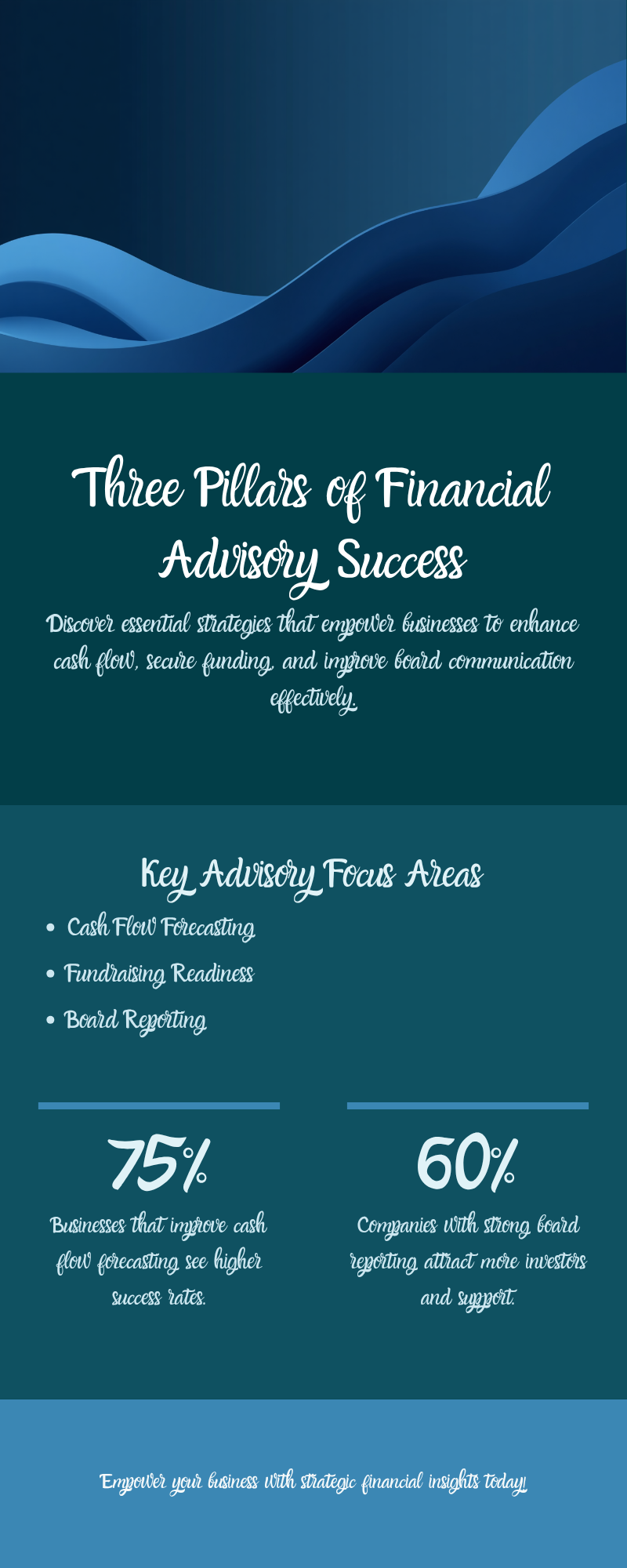
“How much does a fractional CFO cost?” is almost always the first question founders ask. It's a fair question, but it skips the one that actually determines whether the engagement is worth it: what does it return? The real ROI of a fractional CFO shows up in three places — cash flow forecasting that replaces guesswork with a plan, fundraising readiness that keeps a deal from stalling in diligence, and board reporting that turns a data dump into a decision-making tool. Weighed against what those three things are worth when they go right, or cost when they go wrong, the monthly retainer looks less like an expense and more like insurance with a return attached.
Why “Cost” Is the Wrong Starting Question
Most founders price a fractional CFO against a controller's salary, or against doing without — is a bookkeeper plus a spreadsheet getting the job done? That comparison misses what's actually being purchased. A controller or bookkeeper is backward-looking: their job is to tell you accurately what already happened. A CFO is forward-looking: their job is to tell you what's about to happen and what to do about it. The value rarely shows up as a line item. It shows up as decisions made earlier, with better information, than they otherwise would have been — payroll that gets funded because a shortfall was flagged six weeks out, a term sheet that doesn't fall apart in diligence, a board that approves a hire because the numbers behind it hold up under questioning. That's the return the retainer is actually buying.
Cash Flow Forecasting: Trading Guesswork for Runway You Can Plan Around
Research from the JPMorgan Chase Institute, based on transaction data from nearly 600,000 small businesses, found the median company holds only about 27 days of cash buffer — roughly enough to cover a month of expenses if revenue stopped entirely. For a 15-50-person company managing payroll, rent, and vendor commitments, that's a thin margin for error, and it means cash flow surprises aren't rare. They're closer to a when than an if.
A fractional CFO's most immediate contribution is usually a rolling cash flow forecast — typically 13 weeks out, tied to actual bank activity rather than last year's budget — that connects operating assumptions like hiring, collections timing, and inventory purchases to a real cash position weeks or months in advance. The ROI isn't the forecast itself; it's the lead time it buys. Seeing a shortfall coming with six weeks of runway means you can negotiate a vendor term, delay a hire, or draw a credit line on your terms. Seeing it the week payroll is due means you're negotiating from a much weaker position, if you're negotiating at all.
Fundraising Readiness: Turning Due Diligence Into a Formality
Investors and lenders evaluating a deal ask for a fairly predictable package: clean historical financials, a model that ties back to actuals rather than aspiration, trended KPIs, and a cap table and corporate documents that hold up to scrutiny. Companies that assemble this on demand, in the middle of a live raise, tend to lose time and leverage — diligence drags, questions multiply, and momentum with an interested investor erodes, while the finance team scrambles to produce numbers that should already exist.
A fractional CFO's job is to keep that package continuously current, not to build it under deadline pressure. In practice, that means:
Monthly financials that close on a predictable schedule and reconcile cleanly to bank and system-of-record data
A financial model maintained and updated against actuals, not rebuilt from scratch when a raise starts
KPI and cohort trends tracked over time, so growth and unit economics claims are already supported
A data room kept current, so a diligence request is a matter of sharing access, not weeks of assembly
The ROI here is speed and credibility: a raise that closes on its timeline, on terms that reflect the business rather than the impression left by disorganized financials.
Board Reporting: From Data Dump to Decision-Making Tool
There's a meaningful difference between emailing a board a P&L and balance sheet, and handing them a packet that frames the month — what changed, why, what it means for the plan, and what decision the board is actually being asked to make. The first asks board members to do the analysis themselves, usually with less context than the finance team has. The second uses their time for what it's actually for: governance and decisions, not reconciliation.
A fractional CFO typically owns this cadence — a consistent reporting package, a small set of KPIs tracked monthly and tied to strategy, and a narrative that connects the numbers to what the business is trying to do next. The return shows up as faster, better-informed board decisions and as a credibility signal to current and future investors: a company with disciplined reporting reads as one with disciplined operations.
What This Actually Costs, and What It's Worth
A full-time CFO typically commands a base salary in the $225,000–$230,000 range, and once benefits, payroll taxes, and bonus are factored in, the fully loaded cost often lands between $270,000 and $320,000 a year — more for experienced hires in complex industries. A fractional CFO engagement typically runs $3,000–$12,000 a month depending on scope, roughly 60-80% less than a full-time hire, while covering the same core functions: forecasting, fundraising support, and board reporting.
The math that matters isn't the monthly fee in isolation. It's the value of what one avoided cash crunch, one raise that doesn't stall in diligence, or one board decision made with the right numbers in front of it is worth. For most companies in the 15-50-person range, that comparison isn't close — which is why this is an ROI question rather than a cost question in the first place.
Talk to Optimum Financial Solutions
If cash flow visibility, fundraising readiness, or board reporting are the things keeping you up at night, that's precisely the gap a fractional CFO is built to close. Optimum Financial Solutions works with growing companies to build the forecasting, fundraising, and board-ready reporting that turn financial data into decisions — without the cost of a full-time hire. Reach out to Optimum Financial Solutions to talk through where your finance function stands today and what the ROI could look like for you.


Comments